
The Journal · Ongoing Series
Building the Bike: The Long Road to the Starting Line
The continuing story of turning a donated frame into a race-ready machine.
Last updated
Step one was getting a bike. As it turns out, a bicycle frame is sometimes just a very attractive list of additional problems.
Cycling is Cody's newest discipline — the one with the least history and the most unknowns. Whatever bike comes out of this process ultimately has to carry him through the 56-mile bike leg of his first IRONMAN 70.3, in Chattanooga, Tennessee. It is not there yet. This page tracks the honest, occasionally absurd process of getting it there.
Then and Now
Where It Started
August 25, 2026 — a bare donated frame. Not yet a bicycle.
Where It Stands Now
October 9, 2026 — the same frame, drivetrain complete and nearly ready to ride.
Explore the Build
The Stradalli, Part by Part
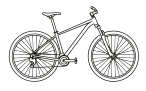
Tap or click a part of the bike for its real status, who helped secure it, and a link to the full story behind it.
Where Things Stand
Current Status
A snapshot, not a finish line. Nothing below is marked done until it actually is — see the full timeline and component board further down for the details behind each line.
Build Status — 25 of 29 components confirmed
Frame / Build
Nearly CompleteDonated 2012 Stradalli carbon frame now looks like a complete race bike — wheels with tires and tubes, handlebar/tape, seatpost, bottom bracket, aerobars, brifters, crankset, pedals, saddle, headset, both derailleurs, chain, and both brake calipers are all installed.
Fit Confirmation
PendingRequires an in-person evaluation, preferably a professional fitting.
Major Component Gap
ResolvedShimano 105 ST-R7000 mechanical 2×11 brifters purchased August 26, 2026.
Aerobars & Seatpost
ConfirmedRedshift Sports is providing aero bars and a seatpost for the build.
Parts Inventory
CompleteFull inventory taken September 19, 2026 — frame, wheelset, cockpit, crankset, saddle, and controls all confirmed in hand.
Remaining Purchases
In ProgressThe front derailleur and chain have arrived and gone on. Only race tires still need to be ordered.
Final Assembly
Nearly CompleteAs of October 9, 2026, the front and rear derailleurs and the chain are installed — every component on the bike is now physically in place. What's left is derailleur tuning, cable finishing, drivetrain adjustments, brake checks, torque checks, and a full once-over before the first ride.
First Outdoor Ride
PendingNot yet — will be marked complete only once it actually happens.
Race-Day Tune-Up
PledgedBicycle Cove has pledged labor several weeks before race day, parts excluded.
The Living Timeline
How We Got Here
One node per date something happened, from the first search for a bike to the newest development. Hover a node for a quick synopsis; click it to open the full update — body, photos, and all.
Drivetrain Installed — Almost Ready to Ride
Derailleurs and chain installed
Big step tonight: the derailleurs and chain are finally installed on the Stradalli.
There's still a fair amount of work left before I trust it on the road — derailleur tuning, cable finishing, drivetrain adjustments, brake checks, torque checks, and a full once-over — but the bike has crossed an important line.
It's no longer a pile of parts becoming a bike.
It's a bike that needs finishing.
After all the cleaning, troubleshooting, replacement parts, cable routing, drivetrain work, and more time in the garage than I'd probably care to admit, all that's really standing between me and the first training ride is a few more hours of wrenching.
That first ride is going to feel earned.
Movement Creates Momentum.
Status
- Front Derailleur
- Installed
- Rear Derailleur
- Already installed; now connected to a complete drivetrain
- Chain
- Installed
- Still To Do
- Derailleur tuning, cable finishing, drivetrain adjustments, brake checks, torque checks, full once-over
Part by Part
Component Status Board
What's confirmed, what's offered, what's still needed — updated as the build's status actually changes.
| Component | Status | Notes |
|---|---|---|
| Frame | In Assembly | 2012 Stradalli carbon frame, sourced through Betsy and the Montgomery Bicycle Club community.— Montgomery Bicycle Club ✓ |
| Fit | Pending | Stack and front-end height require confirmation. |
| Bottom Bracket | Installed | 68 mm threaded; Praxis M30 bottom bracket — installed September 21, 2026.— Praxis ✓ |
| Crankset | Installed | 170 mm Praxis Zayante Carbon crankset with 50/34 chainrings — arrived September 2, 2026, installed September 22, 2026.— Praxis ✓ |
| Chainrings | Selected | 50/34. |
| Wheel & Cassette | Installed | 700C quick-release rim-brake wheelset with a Shimano Ultegra CS-6800 11-speed cassette already mounted — both wheels attached to the frame September 21, 2026. |
| Front Derailleur | Installed | Shimano FD-R7000 clamp-on front derailleur — purchased for $59.40, sidestepping the earlier braze-on-plus-adapter plan since the Stradalli doesn't have an integrated braze-on mount; installed October 9, 2026 alongside the chain. |
| Rear Derailleur | Installed | Shimano 105 RD-R7000-GS medium cage, 11-speed — ordered September 21, 2026 for $38.62, mounted the weekend of September 26-27, 2026. Not required by the current cassette, but leaves room for a wider-range cassette later. |
| Brake Calipers | Installed | Shimano 105 BR-R7000/R7010 dual-pivot calipers, front and rear — ordered September 19, 2026 for $62.12, both installed the weekend of September 26-27, 2026. |
| Handlebars & Stem | Installed | Specialized Hover drop handlebar on a Specialized V13 stem — handlebar installed September 21, 2026. |
| Headset Spacers | Installed | Saipe 9-piece aluminium alloy fork/stem spacer set (2/3/5/10 mm), for front-end stack height, surfaced during assembly — ordered September 21, 2026 for $9.71, installed September 23, 2026 along with the headset top cap. |
| Brake Cables | Installed | Covered by the same Boao Universal Bike Brake Cable Kit purchased for the shift cables/housing — ordered September 18, 2026, delivered September 20, 2026; run from the shifters to both brake calipers the weekend of September 26-27, 2026. |
| Brifters | Installed | Shimano 105 ST-R7000 mechanical rim-brake 2×11 pair; purchased August 26, 2026, installed September 21, 2026. |
| Aerobars | Installed | Quick-Release Clip-on Aerobars, provided by Redshift Sports — an estimated $220 in-kind; installed September 21, 2026.— Redshift Sports ✓ |
| Seatpost | Installed | Redshift Sports Dual Position seatpost — an estimated $250 in-kind; installed September 21, 2026.— Redshift Sports ✓ |
| Seatpost Shim | Installed | Provided by Redshift Sports to adapt the Dual Position seatpost to the frame's seat tube — an estimated $25 in-kind; installed September 21, 2026.— Redshift Sports ✓ |
| Seat Tube Collar | In Hand | Quick-release aluminium alloy seatpost collar, to clamp the Redshift Sports seatpost in the frame — the first order (September 21, 2026, $9.71) turned out to be the wrong size; the correct-size replacement ($9.67) has arrived and still needs to be installed.— Redshift Sports ✓ |
| Saddle | Installed | ISM PR 3.0 (60mm), provided by ISM Saddles — arrived August 28, 2026, installed September 22, 2026.— ISM Saddles ✓ |
| Pedals | Installed | RockBros clipless pedals with cleats, purchased online for $43.19 — arrived September 16, 2026, installed September 22, 2026. |
| Shifter Cables & Housing | Installed — Finishing Pending | Boao Universal Bike Brake Cable Kit (a combined shift- and brake-cable housing set) — purchased September 18, 2026 for $10.76, delivered September 20, 2026; routed and connected to the rear derailleur the weekend of September 26-27, 2026, and to the front derailleur October 9, 2026. Final cable tension/finishing still pending. |
| Handlebar Tape | Installed | ALIEN PROS Chameleon Tail bar tape (set of 2) — purchased September 18, 2026 for $14.40, delivered September 20, 2026, wrapped the weekend of September 26-27, 2026. |
| Chain | Installed | Shimano 105 CN-HG601-11, 11-speed, 116-link — ordered September 19, 2026 for $26.48, arrived September 25, 2026, installed October 9, 2026 alongside the front derailleur. Three pairs of quick links ($9.17) purchased alongside it. |
| Assembly Grease | In Hand | Peaty's Speed Grease, 100g — ordered September 21, 2026 for $14.03; arrived and used to install the crankset, September 22, 2026. |
| Training Tires | Installed | Vittoria Zaffiro EVO, 700×25C, black — ordered September 22, 2026 for $82.71, specifically for training rides; mounted September 30, 2026. |
| Race Tires | Needed | Targeting Continental Grand Prix 5000s, likely 700×25C — pending a clearance check for 28s on this older frame/brake setup. |
| Tubes | Installed | An initial pair ($15.00) plus an additional two-pack ($6.48) — purchased for the training tires and as race-day spares; installed with the training tires September 30, 2026. |
| Assembly | Nearly Complete | As of October 9, 2026: every component is physically installed — wheels, tires and tubes, handlebar, bar tape, seatpost, bottom bracket, aerobars, brifters, crankset, pedals, saddle, headset spacers/top cap, both derailleurs, chain, and both brake calipers. What's left is derailleur tuning, cable finishing, drivetrain adjustments, brake checks, torque checks, and a full once-over before the first ride. |
| Pre-Race Tune-Up | Confirmed | Bicycle Cove labor pledged; parts excluded.— Bicycle Cove ✓ |
| First Outdoor Ride | Pending | Not marked complete until it happens. |
Coming Soon
What's Coming Into Focus
Only real campaign photographs appear on this page. These slots stay empty and clearly labeled until there's an actual photo to put in them.
The Mechanic's Inspection
Bruce evaluating the frame and components in person.
Photo Coming Soon
First Completed Bike
Only once it's actually assembled — not before.
Photo Coming Soon
First Outdoor Ride
The first time this bike actually goes anywhere.
Photo Coming Soon
Final Race Configuration
The bike as it lines up at IRONMAN 70.3 Chattanooga.
Photo Coming Soon
Gratitude
The People Helping Build the Bike
A frame doesn't become a bicycle alone. Text-only for now — logos may be added later, with permission, without changing this section's layout.
Confirmed Support
Betsy & MBC
Frame sourcing, component inventory, mechanical evaluation
Identified the donated Stradalli frame, began cataloguing available components, and connected the build with Bruce and Praxis.
Bruce
Fit and mechanical assessment
Raised the fit question that's currently gating the build, and is evaluating the frame and components in person.
Praxis
Bottom bracket & crankset
Provided a compatible bottom bracket and 170 mm crankset in the selected 50/34 chainring configuration.
Bicycle Cove
Pre-race tune-up
Pledged complimentary labor for a pre-race tune-up, parts excluded, scheduled well ahead of race day.
Redshift Sports
Aero bars & seatpost
Providing aero bars, a seatpost, and a seatpost shim for the race bike build — an estimated $495 in-kind.
Feedback Sports
Mechanic stand
Donated a Pro Mechanic 2.0 repair stand for the build and everything after it.
ISM Saddles
Saddle
Provided the saddle going on the race bike — and sent a shirt along with it.
Conversations in Progress
Not yet confirmed support — listed here so nothing above reads as a locked-in sponsorship before it actually is one.
Redemptive Cycles
Used brifters request concluded
A request for a compatible used pair was submitted August 26, 2026. A suitable Shimano 105 ST-R7000 pair was subsequently sourced and purchased elsewhere, closing the immediate brifter requirement.
Why It Matters
More Than a Bike
I got this bike as a collection of parts.
Over the course of months, I worked with different groups and organizations — brainstorming ideas, chasing down support, sourcing components one at a time. The pile of parts kept growing. A crankset here. A saddle there. A stand to work on it. With each new part, a little more got added to the bike.
Now, nearly at the finish of the build, it's become something more than a bike.
It represents rebuilding ourselves into something capable of carrying us through the challenges of life. We can't do that if we're missing pieces of ourselves.
Sometimes that means getting new parts for ourselves — techniques to cope with stress, outlets that keep our minds and bodies strong. Sometimes it means repairing and refining what's already there.
Either way, the goal is the same: putting something together that's more powerful and more meaningful than just the sum of its parts.
Progress rarely arrives fully assembled. Sometimes it appears as a bare frame, a box of parts, a few people willing to help, and the decision to keep moving.
Tri For The 22 connects veterans and first responders with resources that can help them confront mental and physical barriers, while raising public awareness and funds for charitable organizations serving those communities. “22” has become a widely recognized symbol of veteran suicide awareness — historically significant, but not the current national number. The VA's most recent data (2023) puts the daily average at 17.5 Veterans lost to suicide, and law enforcement faces a version of the same crisis, with far less complete reporting, roughly every 2 to 3 days.
Keep It Moving
Help Carry This Forward
The mission this bike is being built for still needs support of its own. The Stradalli build has now secured its Shimano 105 2×11 brifters, and the focus is shifting toward final fit, remaining consumables, aerobar compatibility, assembly, and testing.